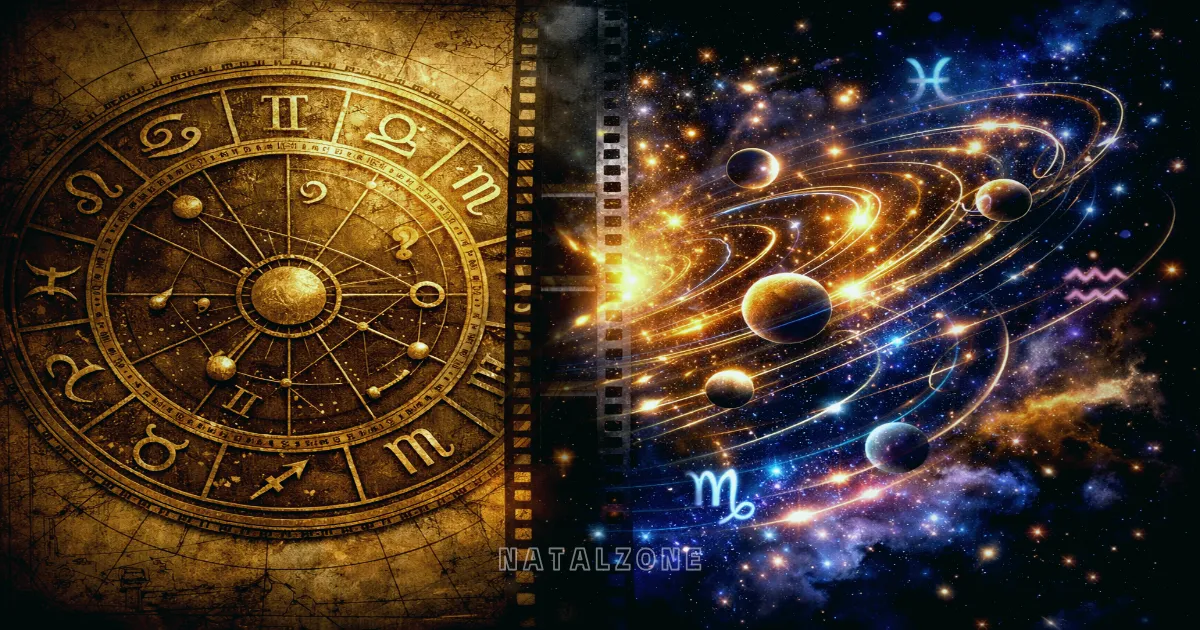
Your birth chart shows the exact sky at your first breath, but it doesn't stop there. As time moves, your inner world keeps evolving — and progression charts reveal that slow, continuous transformation unfolding behind the scenes of your life.
Your Birth Chart Is a Snapshot. Your Progression Chart Is the Film.
You already know your Sun sign. You probably know your rising and your Moon. But here's the thing nobody tells beginners: that natal chart? It's frozen in time. It shows who you were at the moment of your first breath — not who you're becoming right now.
That's where a progression chart changes everything.
Secondary progressions work on one deceptively simple principle: every single day after your birth equals one full year of your life. So if you're 30 years old today, astrologers look at the sky 30 days after your birthday to understand the planetary climate you're living in right now. The outer world didn't shift — you did, internally, exactly on schedule.
This is why a progression chart feels personal in a way your daily horoscope never will. A horoscope tells millions of Scorpios the same thing. Your progression chart is calculated from your exact birth data and speaks only to you.
➜ Use our free Progression Calculator to generate your chart instantly — no manual ephemeris, no math, no waiting.
How Secondary Progressions Actually Work (The Day-for-a-Year Method)
The technique has a formal name: the Day-for-a-Year method, also called Secondary Progressions. It's the backbone of predictive astrology and has been used by serious practitioners for over 300 years.
Here's the mechanics in plain language:
- You were born on, say, July 15, 1990.
- To find your progressed chart at age 35, an astrologer looks at the planetary positions on August 19, 1990 — exactly 35 days after your birth.
- Those planetary positions represent your inner psychological landscape at age 35.
The fast-moving planets — Sun, Moon, Mercury, Venus, Mars — progress meaningfully within a human lifetime. The outer planets (Jupiter, Saturn, Uranus, Neptune, Pluto) move so slowly they barely shift at all. This is why progressions are fundamentally an inner planet technique.
Expert Insight: Most beginners focus only on the progressed Sun. Don't make that mistake. Your progressed Moon is often the most immediately relevant timing indicator in your entire chart. It changes signs roughly every 2.5 years and marks real, felt emotional shifts — not abstract symbolic ones.
The Progressed Moon: Your 2.5-Year Emotional Cycle
If you've ever gone through a period where your mood, your priorities, and even your social circle all quietly reshuffled — and you couldn't explain why — there's a good chance your progressed Moon changed signs.
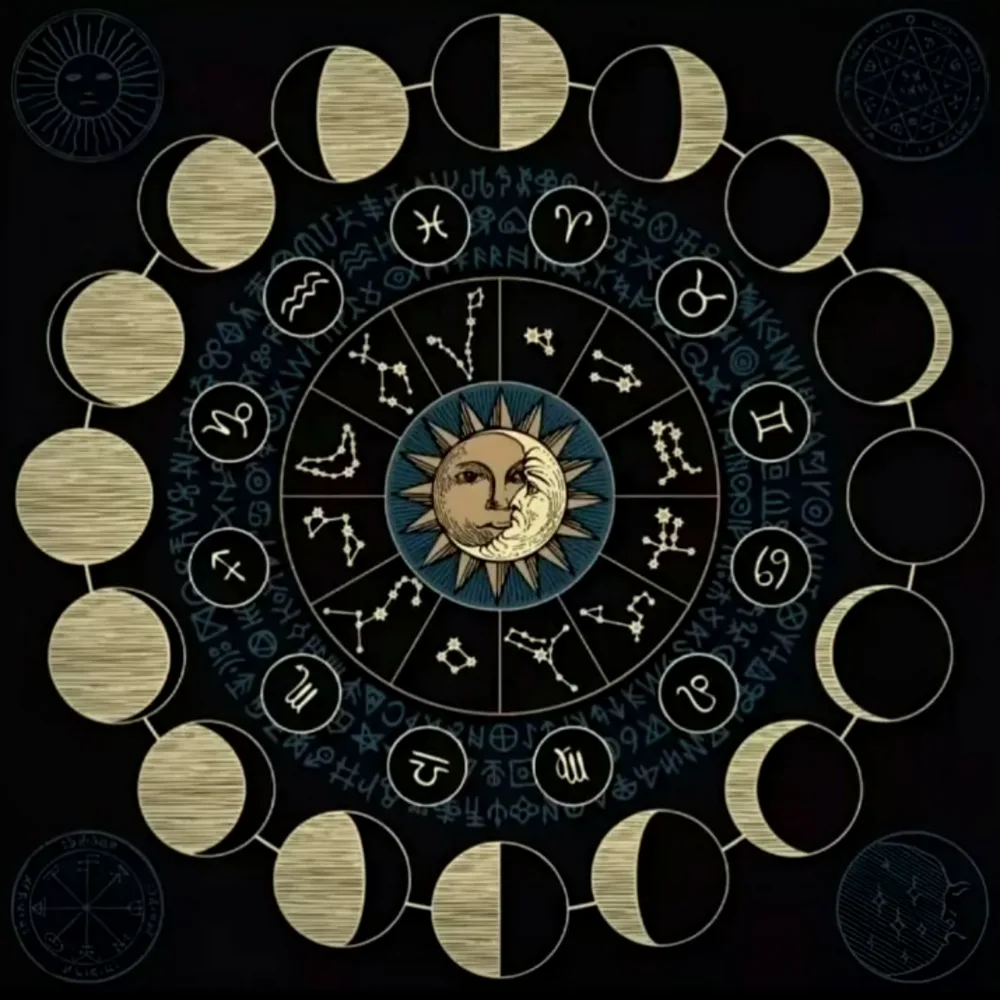
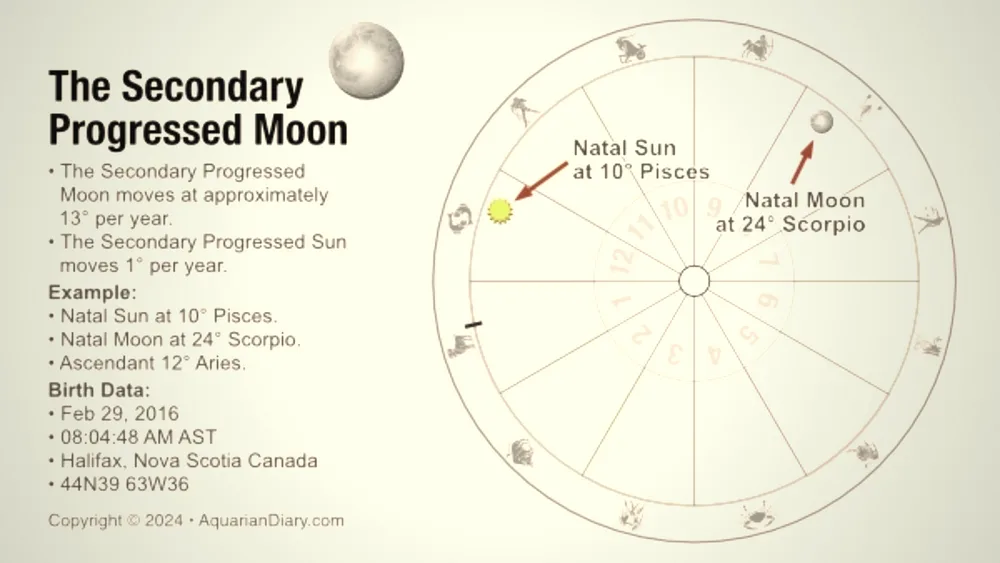
The progressed Moon moves roughly 12–14 degrees per year, meaning it completes a full zodiac cycle every 27–29 years. Each sign it passes through creates a distinct emotional season:
- Progressed Moon in Aries: Urgency, independence, impatience with compromise.
- Progressed Moon in Cancer: Deep nesting instinct, heightened sensitivity, family focus.
- Progressed Moon in Capricorn: Ambition, emotional discipline, results over feelings.
- Progressed Moon in Scorpio: Intensity, confronting what's been buried, transformative crisis.
These aren't moods that last a week. They're 2.5-year chapters of your emotional life.
To find out which sign your progressed Moon currently occupies, run your data through our Progression Calculator — it calculates this automatically from your birth date, time, and location.
Critical Degrees & Aspects: The Moments That Actually Matter
Not all progressed motion is equal. The highest-voltage moments in a progression chart occur when:
1. A Progressed Planet Changes Signs (0°)
When your progressed Sun moves from Gemini to Cancer, you don't announce it at a dinner party — but people around you notice. The shift is internal and gradual, but by 0° of the new sign, the psychological reorientation is real. Sign changes in the progressed chart are 20–30 year transitions.
2. A Progressed Planet Forms an Exact Aspect to a Natal Planet
This is where timing gets precise. When your progressed Venus hits an exact conjunction with your natal Jupiter, the window for abundance, relationships, or creative recognition opens. When progressed Mars squares natal Saturn, friction and forced restructuring arrive.
3. The Progressed Moon Hitting a Natal Sensitive Point
When the progressed Moon crosses your natal Ascendant, Descendant, or conjuncts a natal planet, events tend to crystallize — especially in relationships and public life.
Expert Insight: Astrologers often treat a progressed planet at exactly 0° of a new sign as a "soft reset" for that planet's themes. The year your progressed Sun enters a new sign is typically one of the most internally significant years of that decade, even if nothing dramatic shows up externally. Journal it.
The Progressed Lunation Cycle: Your 30-Year Personal Reset
Here's the big-picture timing tool most intermediate astrologers skip too quickly: the Progressed New Moon.
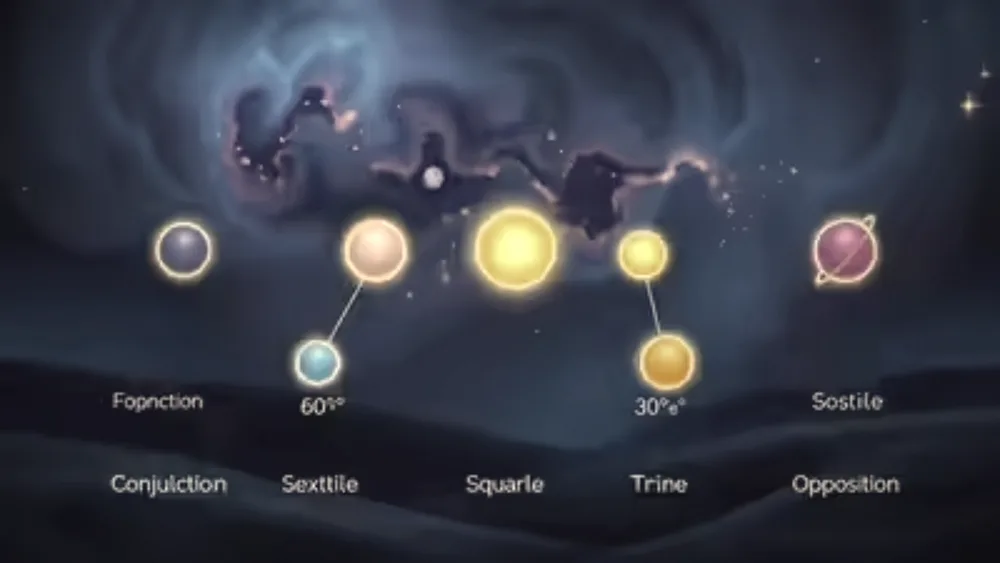
Roughly every 29–30 years, your progressed Moon catches up to your progressed Sun and forms a conjunction — a Progressed New Moon. This is the beginning of a new 30-year cycle in your life. The house and sign of this conjunction describes the entire thematic territory you're being invited to develop for the next three decades.
The Progressed Lunation Cycle has eight phases, mirroring the actual lunar cycle:
| Phase | Approximate Angle | Theme |
|---|---|---|
| New Moon | 0° conjunction | New beginning, planting seeds |
| Crescent | ~45° | Building momentum, facing resistance |
| First Quarter | ~90° | Crisis of action, commitment required |
| Gibbous | ~135° | Refinement, adjustment |
| Full Moon | ~180° | Culmination, peak visibility, harvest |
| Disseminating | ~225° | Sharing, teaching what was learned |
| Last Quarter | ~270° | Reorientation, letting go |
| Balsamic | ~315° | Release, surrender, preparation |
If you're currently in a Balsamic phase (the 3–4 years before a Progressed New Moon), you may feel like nothing is sticking — projects stall, relationships drift. That's not failure. That's the cosmos clearing the deck for your next 30-year chapter.
Expert Insight: The house your Progressed New Moon falls in is as important as the sign. A Progressed New Moon in your 10th house launches a career-defining cycle. In the 4th house, it's a domestic and ancestral chapter. Look at both simultaneously.
How to Read Your Progression Chart Results (A Practical Mini-Guide)
Once you've run the Progression Calculator, you'll see your progressed planets listed alongside your natal positions. Here's how to interpret what you're looking at.
Start with three questions:
-
What sign is my Progressed Sun in?
This describes the identity you're currently growing into. If you were born with Sun in Virgo but your progressed Sun is in Scorpio, you're in a decade-long chapter of intensity, depth, and transformation. -
What sign is my Progressed Moon in?
This is your immediate emotional weather. What does that sign's needs feel like right now? Are you honoring them? -
Are any progressed planets within 1° of a natal planet?
This is your active "live wire." A progressed planet within 1° orb of a natal position is currently activated and producing felt events or psychological shifts.
Then check for sign changes:
If any progressed planet sits between 28°–2° of a sign, you're either exiting an old chapter or just entering a new one. Both transitions carry weight.
Stop Calculating by Hand. Use the Tool.
Manual secondary progression calculation requires an ephemeris, a time zone correction table, and about 45 minutes per chart. Professional astrologers used to spend entire sessions doing this math before a reading even began.
Our Progression Calculator does all of it instantly:
- Calculates your progressed Sun, Moon, Mercury, Venus, Mars, and more
- Shows exact degrees and signs for today's date (or any date you specify)
- Identifies active progressed aspects to your natal chart
- Displays your current Progressed Lunation Phase
Your next step: Open the calculator, enter your birth date, time, and city, and look immediately at your Progressed Moon sign and your Progressed Sun sign. Write them both down. Then scroll back up to this article and re-read the section for each sign.
That 10-minute exercise will give you more personal clarity than six months of reading daily horoscopes. That's not an overstatement. That's just how progressions work.